19 solar flares in 24 hours: new active region may be far larger than it appears
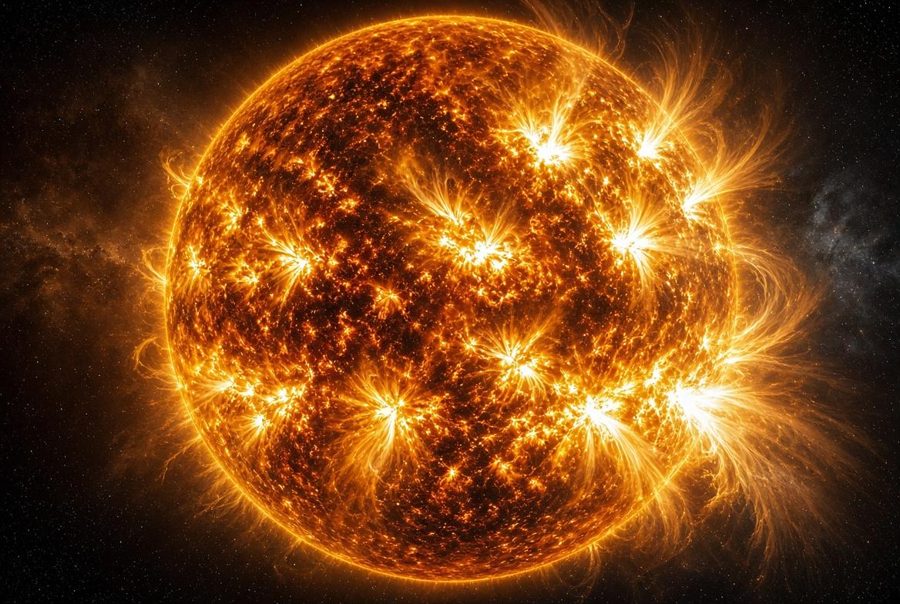
The Sun has shown a sharp increase in activity over the past 24 hours, with 19 solar flares recorded — a notable jump compared to previous days. The source of this surge is a new sunspot region, designated number 4513, which has emerged at the visible edge of the solar disk.
Although the sunspot group currently appears relatively small, its full structure has not yet rotated into view from behind the Sun's limb. Scientists warn that the actual scale of the active region could be significantly larger. Sunspots are formed by powerful magnetic fields that originate deep within the star and gradually rise to the surface. The current situation is comparable to an iceberg: the visible portion may not reflect the true size of the magnetic structure beneath.
Despite the heightened activity, Earth has experienced no major geomagnetic disturbances for nearly 20 hours, even though the planet remains within a stream of faster and hotter solar wind. Isolated bursts of geomagnetic activity remain possible through Friday. By the weekend, space weather is expected to stabilize, according to current forecasts.
The emergence of Region 4513 is of particular interest to solar physicists, as large active regions that rotate into view from the Sun's eastern limb often produce powerful flares and coronal mass ejections aimed toward Earth in the following days. Monitoring continues for any signs of further development or eruptions that could impact our planet's magnetosphere.